
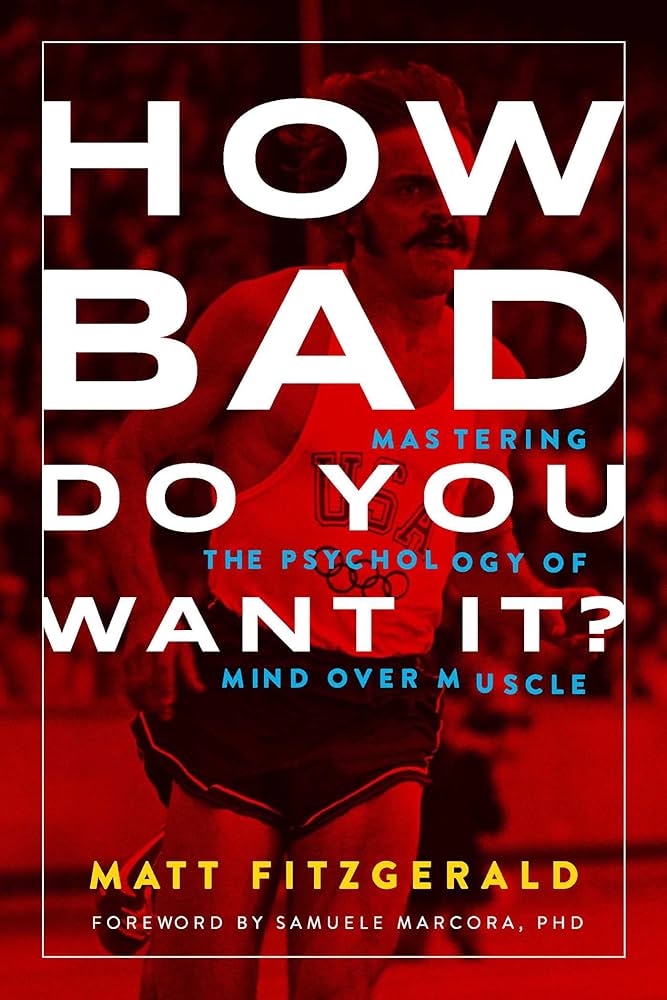
This is truly one of my favorite books of all time as it merges my two favorite topics: running and psychology. This book explains in detail why I fell in love with running and what keeps me coming back time and time again to learn more about myself through the sport. Throughout the book, Matt takes you through several case studies to reflect key psychological aspects of endurance sports and details how you can apply lessons on mental fitness to your own journey.
The main focal point throughout the book is perception of effort, how hard it feels to engage in a physical activity, and what it can be affected by. Most of us focus heavily on how physical fitness changes perception of effort; this makes sense as it’s easy to notice increase in physical fitness decreases the perception of effort needed to maintain the same pace or distance. However, it’s also helpful to focus on the mental aspects that can also lower perception of effort and increase the percent of physical fitness utilized. We can’t fully reach our physical limit-your brain will stop you first to prevent catastrophic injury or death-which is a good thing! But, we can use psychological methods to push the mind to let us push our limits further than we thought we could.
Several chapters cover research backed coping styles that can be learned and used during races. One is bracing yourself, you’ll do better if you prepare for and expect pain. I’ve seen this work in marathons many times, it’s better to go in knowing it will get tough so you’re prepared when the hard moments in the later miles come. Additionally, research has shown that reasonable time based goals are more motivating and effective than generic goals. The reasonable aspect is important, they should be challenging but not so far out of reach they become demotivating.
The book also covers way to come back from failures and challenging experiences in training and races. Repeated failure can build resilience if it leads to healthy anger not defeat. The author also discusses how overtraining can lead to failures and how to overcome the mindset that often leads to overtraining. Overtraining is fueled by perfectionism and compulsion but can be overcome with self trust and self assurance.
Lastly, the book covers aspects of training and racing environment that can also help lower perception of effort and improve performance. The group effect makes training in a group often more effective than training alone. Additionally, the audience effect, having encouragement from others, motivates you to try harder and makes you feel capable to try harder in races. This is part of why race day is so special and why the race environment can make race day pace feel so different than it does in training.
Overall, this book is packed with key lessons that all endurance athletes can utilize to improve performance. It’s easy to get wrapped up in training your body and forget to train your mind, but focusing on mental fitness in training can unlock a whole new level of success. This is a great book to use to completely transform your approach to training and racing.
Next month: Choosing to Run by Des Linden